A Terrible Beauty
After Charles Leerhsen · with Joel Ontoy Bautista
The Record
A student of the game. Not the monster they sold.
Drawn from Charles Leerhsen’s Ty Cobb: A Terrible Beauty (Simon & Schuster, 2015). Leerhsen went back to the newspapers and letters of Cobb’s own day. The later legend made a cartoon. The record is sterner, and smaller.
“The Negro should be accepted and not grudgingly but wholeheartedly.”
Leerhsen does not wash him clean. Cobb was high-strung. He fought, on the field and off it. His mother shot his father the month the boy reached Detroit. Teammates hazed the bibliophile who packed Les Misérables. What the book takes off the statue is the later varnish: sharpened spikes as a habit, a cartoon racist. Warts, Leerhsen said. Not tumors.
Twenty-two seasons in a Detroit uniform, 1905 to 1926 — then two years in Philadelphia. In Woodbridge he kept a duplex at 4117 Commonwealth, a walk down Trumbull to Bennett Park. He also used the Pontchartrain Hotel, and later Boston-Edison. Winters, Georgia. Detroit was the work.
The close is not a retired number. In 1950 Cobb Memorial Hospital opened in Royston on his hundred-thousand-dollar gift, named for his parents — a hospital built with a bat, still a hospital. In 1953 he started the Ty Cobb Educational Fund, scholarships for Georgia students, still paid. The Ty Cobb Museum on Cook Street is still open. That is the legacy.
The pictures never did his character justice. Ron Shelton’s Cobb (1994), after Al Stump, with Tommy Lee Jones, sold the monster. Field of Dreams had Shoeless Joe say Cobb wanted to play — they told him to stick it. Leerhsen’s newspapers do not match those scripts. We do not use Stump as a source. We name the films that copied him.
22
Tiger seasons
.366
Career average
12
Batting titles
4,189
Hits
897
Stolen bases
54
Steals of home
1950
Cobb Memorial Hospital
1953
Educational Fund
The Card
T206, shown actual size.
The White Border set — collectors call it The Monster — was printed to fit a cigarette pack. Cobb appears in four poses. This is Portrait–Red, 1-7/16 by 2-5/8 inches. A modern card is drawn around it at 2½ by 3½.
Modern 2½ × 3½
T206 at true size — 1-7/16" × 2-5/8". Tap the card for the reverse.
- Issued
- 1909–1911
- Catalog
- T206 White Border
- Size
- 1-7/16" × 2-5/8"
- Metric
- 36.5 × 66.7 mm
- Cut
- ±1/16" typical
- Stock
- Thin cardboard, pack-fit
- Color lithograph
- Type
- Dark brown caption
- This pose
- Portrait–Red
- Cobb in set
- 4 poses
- Subjects
- 524
- Issuer
- American Tobacco Co.
- Portrait, red background — this card
- Portrait, green background
- Bat on shoulder
- Bat off shoulder
Caption ink is dark brown, not black. Cutting was by hand, so unaltered cards wander about a sixteenth of an inch. The reverse shown is a reconstruction of the common Piedmont 350 advertisement — brand never appeared on the front.
Archive
Public-domain stills
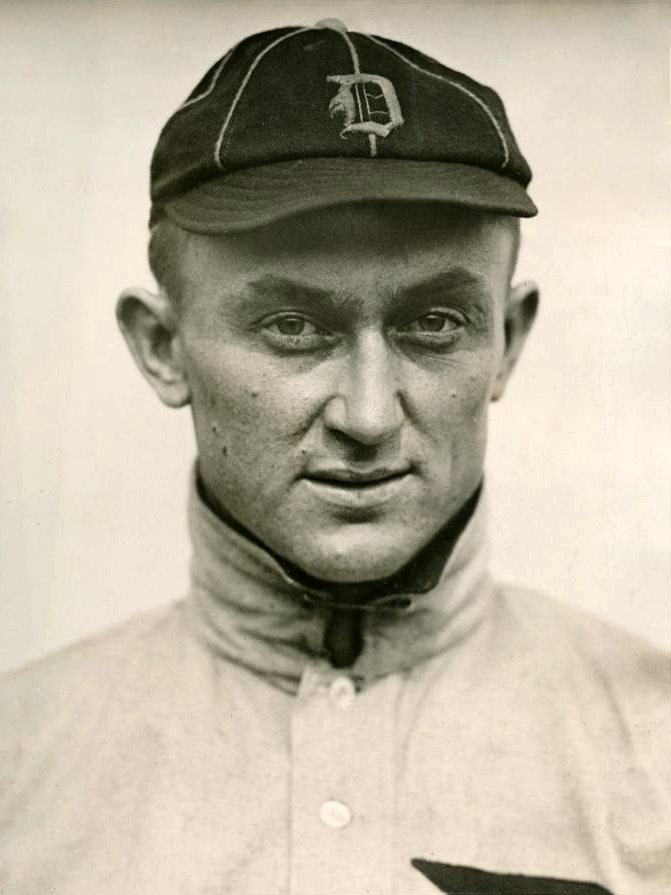
Detroit, 1913
1913
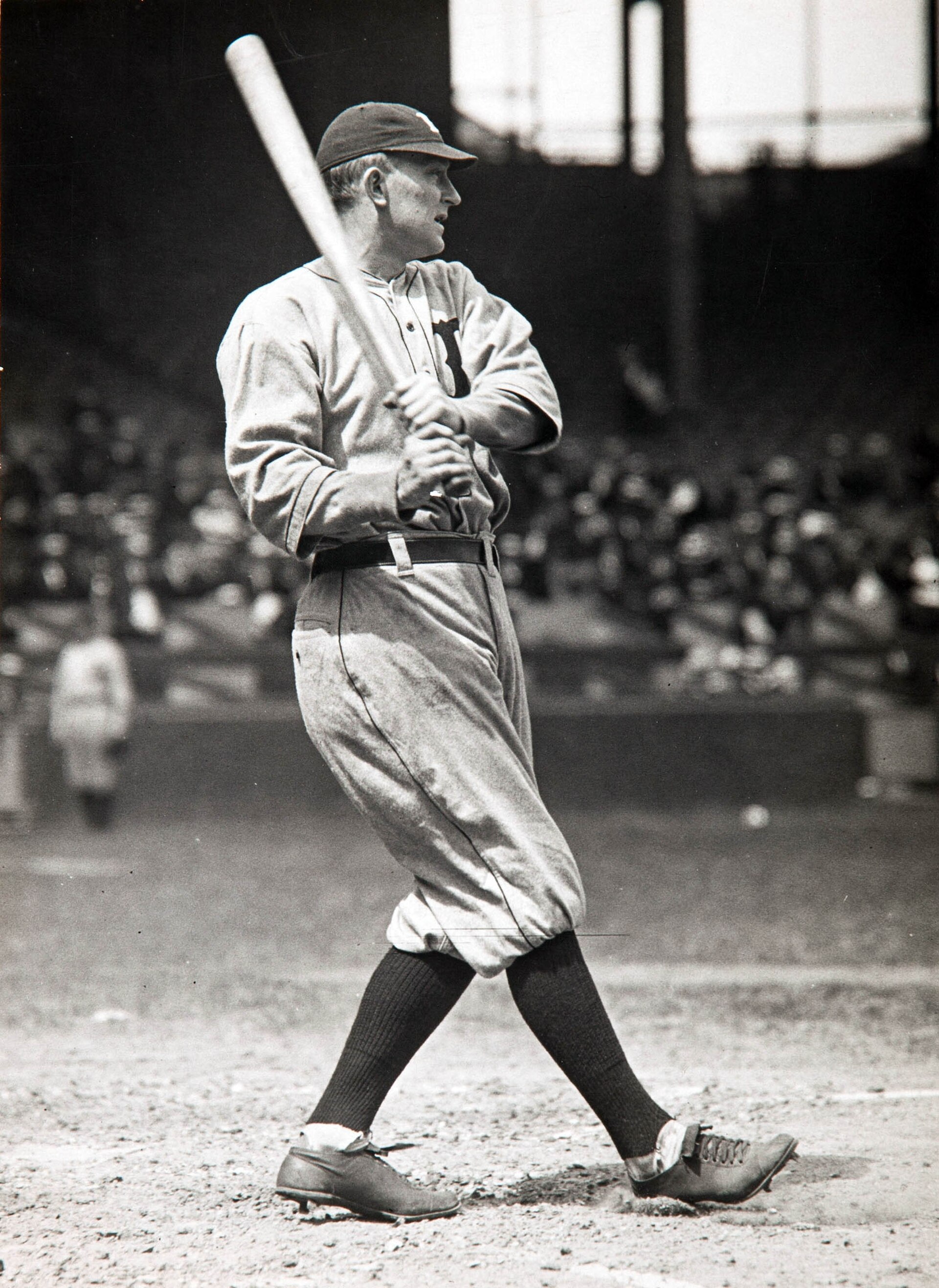
Paul Thompson portrait
c. 1918
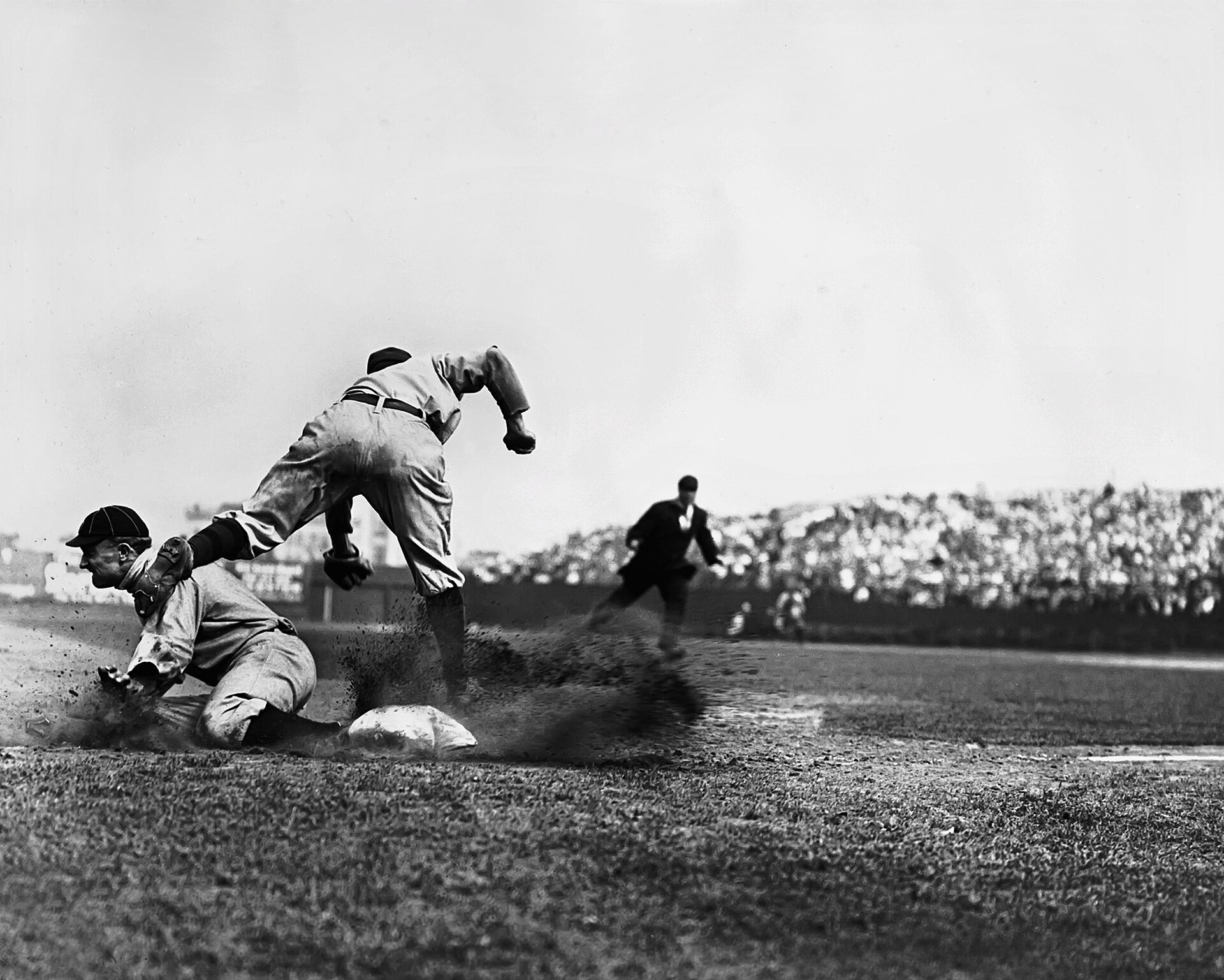
Conlon’s slide into third
1909
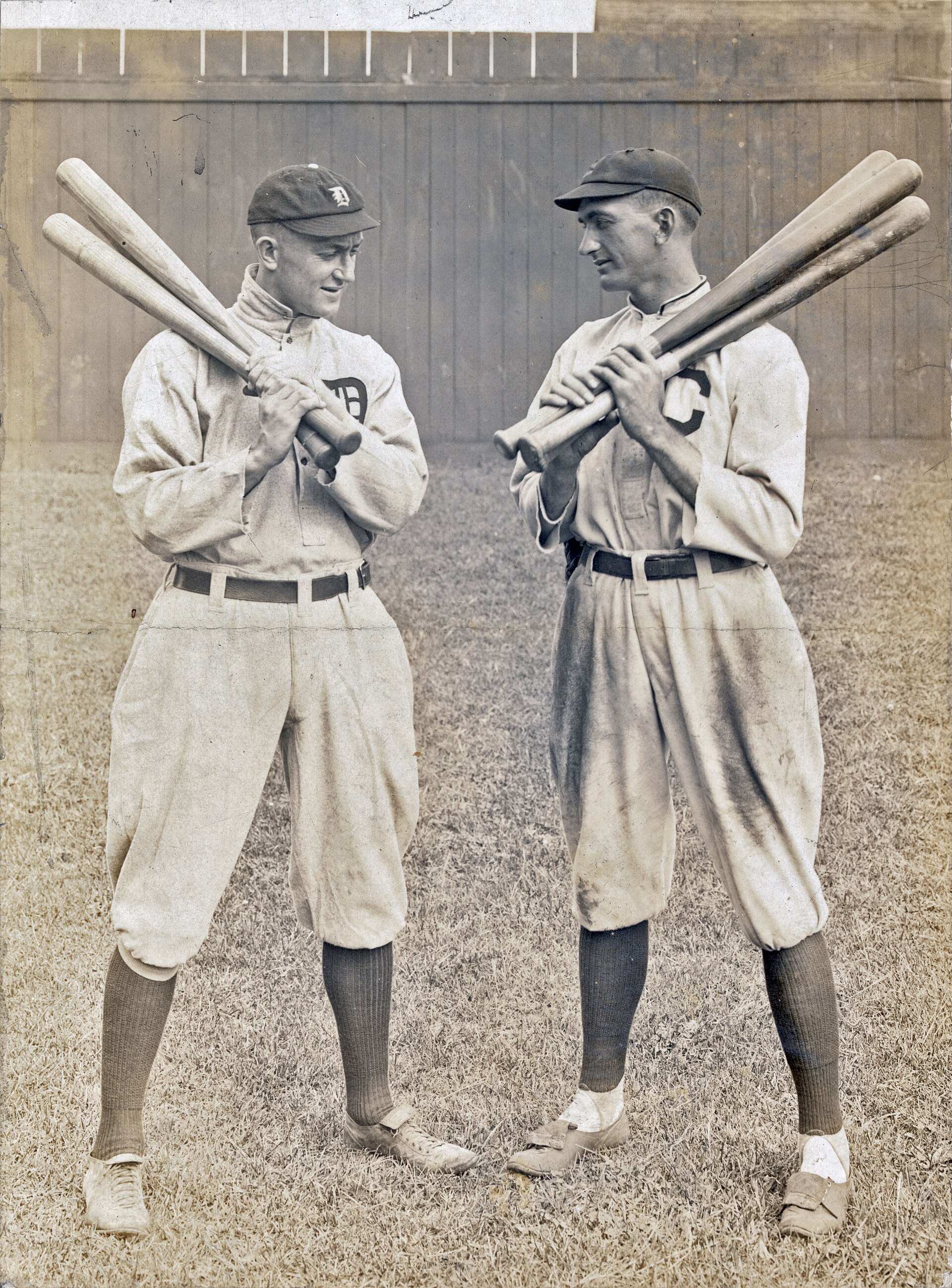
With Joe Jackson
1913
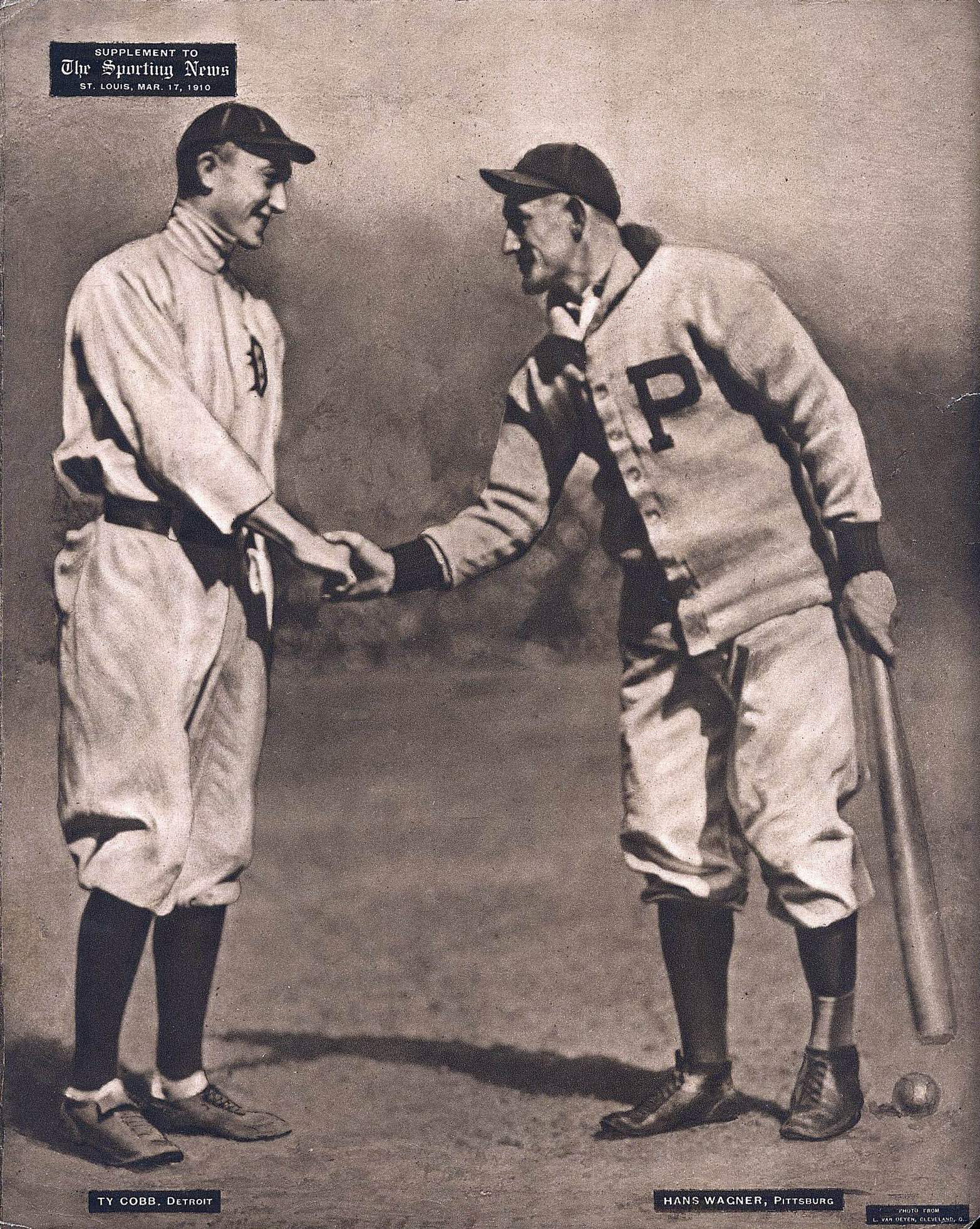
With Honus Wagner
1909
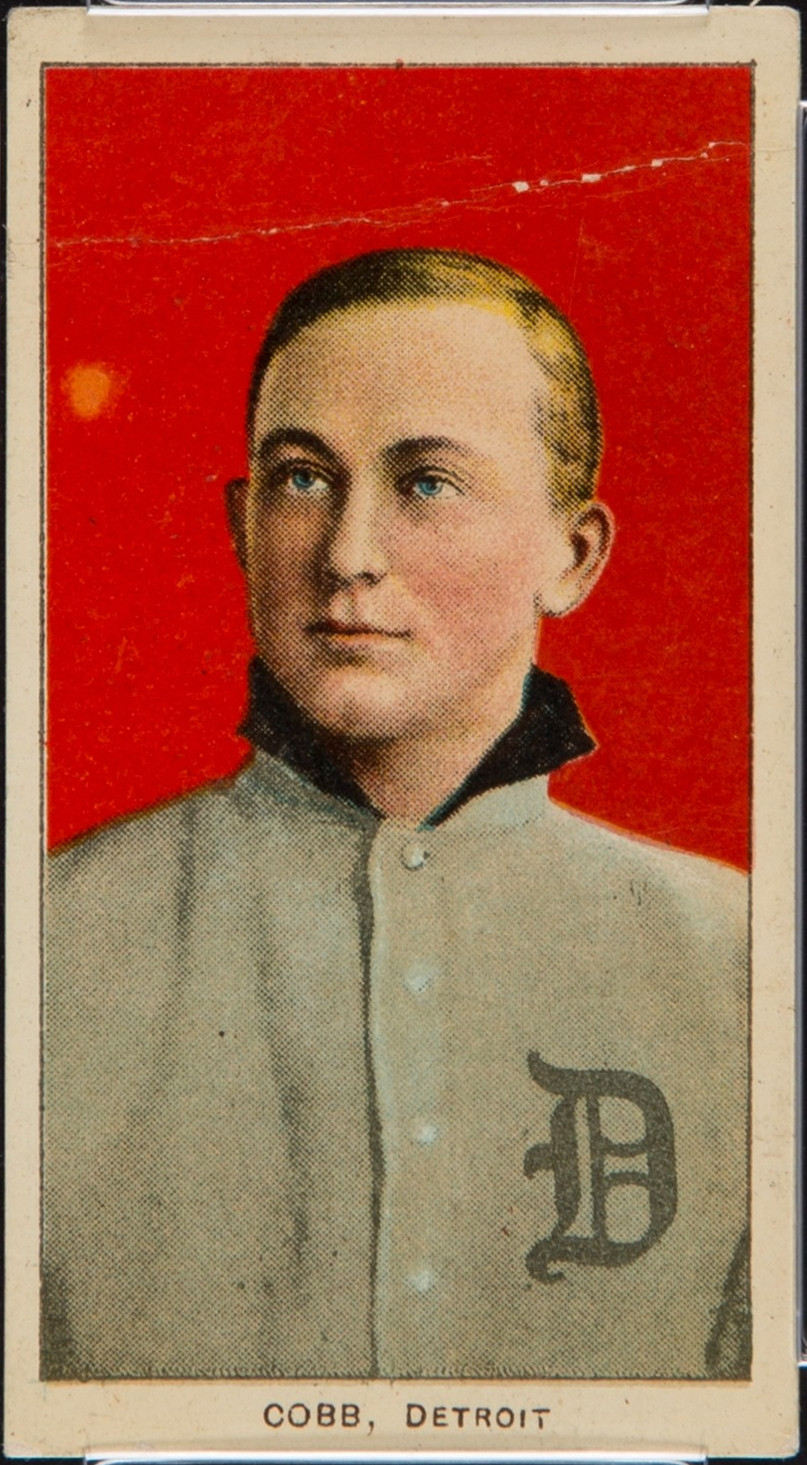
T206 Portrait–Red
1909–11
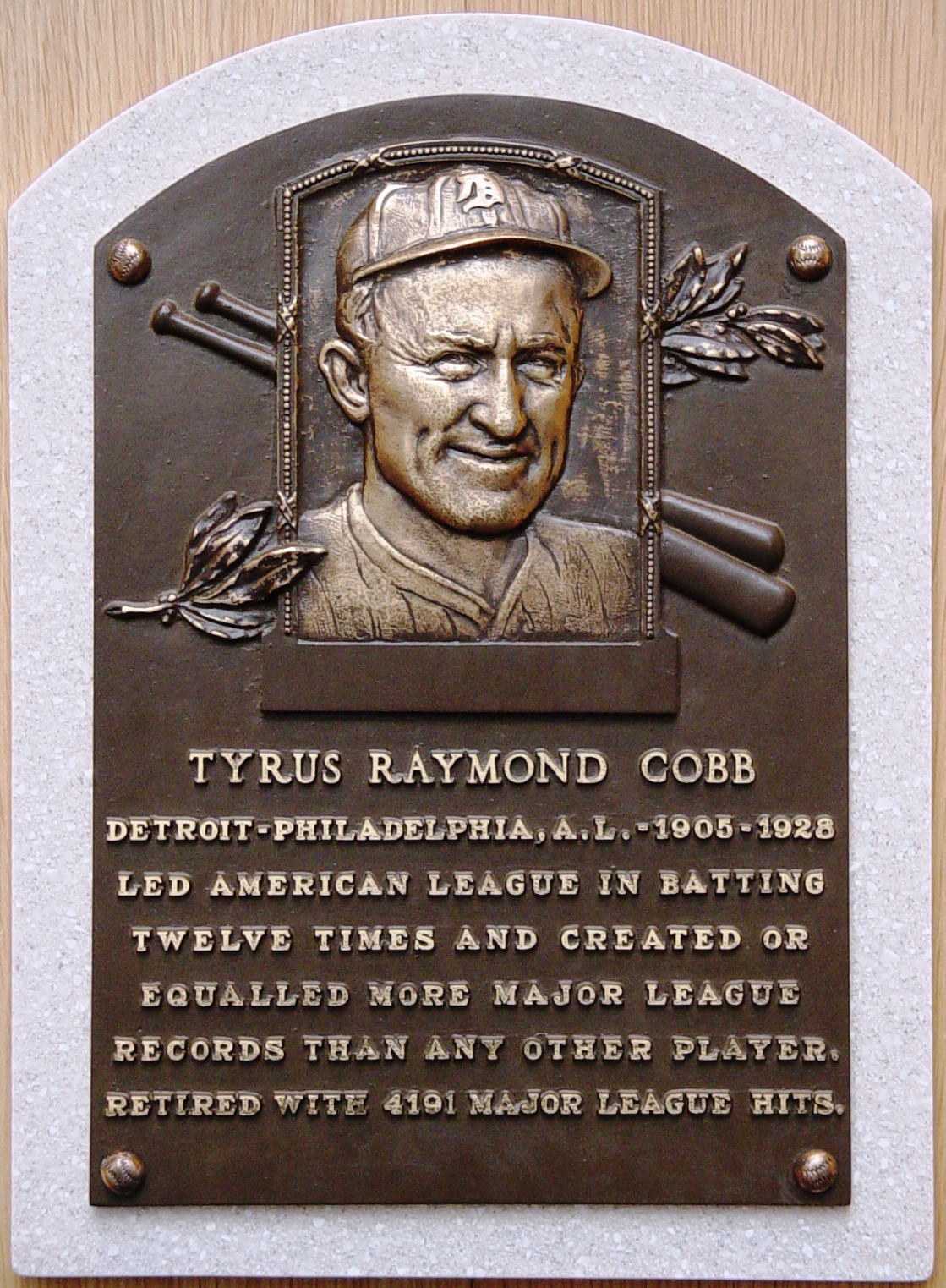
Hall of Fame plaque
1936
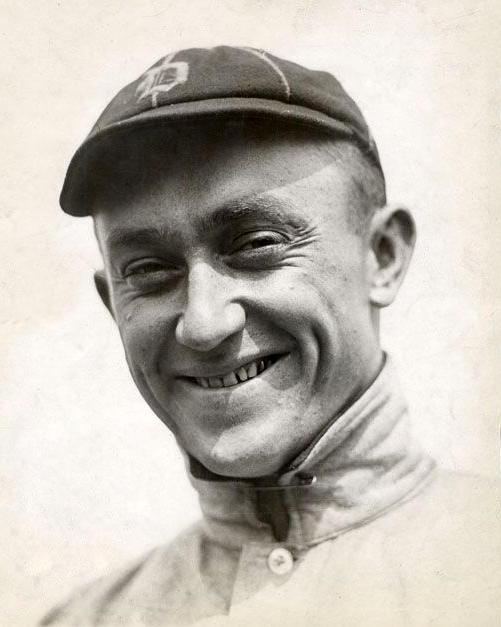
The Georgia Peach
1916
Photographs: 1913 Detroit portrait; Paul Thompson, c. 1918; Charles M. Conlon, 1909; Cobb with Joe Jackson, 1913; Cobb with Honus Wagner, 1909 World Series; T206 Portrait–Red; National Baseball Hall of Fame plaque; the Ty Cobb sliding statue at Comerica Park, successor to Tiger Stadium. All images used here are in the public domain in the United States or used as documentary stills of public monuments. Narrative drawn from Charles Leerhsen, Ty Cobb: A Terrible Beauty (Simon & Schuster, 2015). Film in collaboration with Joel Ontoy Bautista.